- Marketing Lab 360
- Posts
- 360° Ecosystems vs. Linear Funnels: The Evolution of Strategic Architecture
360° Ecosystems vs. Linear Funnels: The Evolution of Strategic Architecture

Marketing Lab 360
April 05, 2026
1. The End of the Straight Line
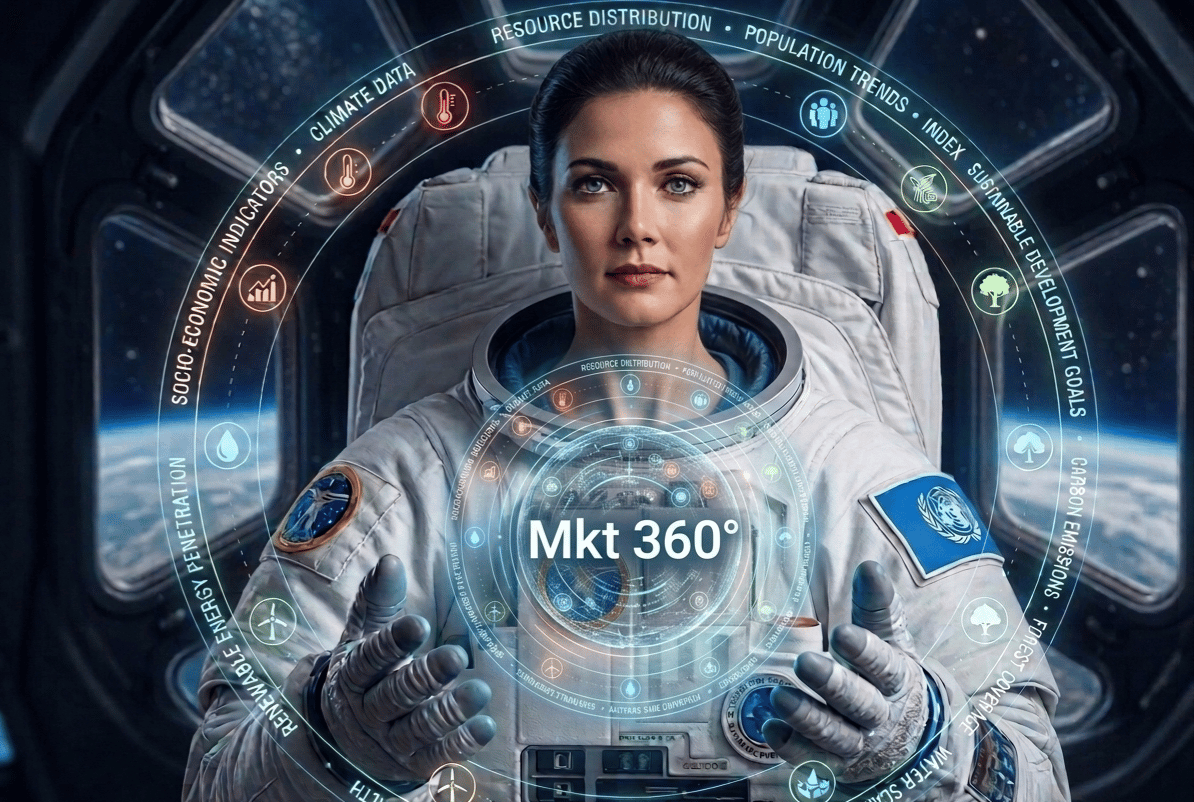
Traditional marketing taught us to think in tunnels: a wide entry, a constant filter, and a narrow exit. However, in the 2026 digital landscape, the consumer is not an object that "falls"; they are a hyper-connected user in orbit.
The reality is that the Customer Journey has ceased to be a predictable progression, becoming instead a series of disorganized micro-moments. If your strategy remains a rigid funnel, you are forcing the user to follow a path that no longer exists. A refined business does not push; it attracts.
2. The Fragility of the Funnel: Why Linear Structures Fail
Linear funnels are, by definition, fragile. They are built on friction: each stage is an obstacle the lead must overcome. If a single link in the chain breaks—an email that never arrives, a slow link, or an inconsistent message—the entire investment is lost.
In a linear structure, the focus is purely transactional. Once the client exits the end of the funnel, the system stops nurturing them. It is an architecture of "disposability" that ignores the most valuable asset of any high-impact brand: Customer Lifetime Value (LTV).
3. The Solution: The 360° Ecosystem
Faced with the fragility of the line, we propose the robustness of the circle. A 360° Ecosystem is an architecture where every touchpoint is interconnected. It doesn’t matter if the user arrives through a tweet about the Artemis II mission, a Marketing Capsules episode, or an organic search; the experience of authority remains constant.
Unlike the funnel, the ecosystem offers strategic redundancy. If one channel fails, the brand survives because the user is immersed in an environment of value, not a waiting line. Here, the strategic map is not a route to the exit, but a support system that ensures the expert is always perceived as such.
4. The Evolution: From "Push" to Strategic "Pull"
The transition from a linear funnel to a 360° Ecosystem marks the shift from a marketing of pursuit to one of magnetic attraction. In the traditional model, effort is centered on "pushing" the prospect through forced stages. In contrast, an ecosystem architecture leverages high-value content and consistency to generate a Pull effect.
When your social presence, your podcast, and your strategic threads are aligned, the client doesn’t feel they are being "sold." They feel they have entered an environment of solutions where their problem has already been anticipated. This is true strategic omnipresence: it’s not about being everywhere, but about being relevant at every touchpoint the user chooses for interaction.
5. Conclusion: Your Business Architecture is Its Destiny
In the race for authority in this Q2 of 2026, improvisation is the greatest enemy of scale. Much like the Artemis II mission, where every system must function in perfect synchrony to cross the boundary of gravity, your marketing requires an infrastructure that supports your ambition.
A business operating without a clear map is a business living in uncertainty. If your goal is to stop generating "noise" and start scaling your impact, the solution isn't more advertising; it is better architecture. Precision is not just a metric; it is the only strategy that ensures your value as an expert is recognized and sustainable.
The Next Step Toward Authority
Is your platform ready for launch, or are you still operating with invisible conversion leaks?
It is time to leave linear models behind and design a system that works for you. I have condensed years of strategic analysis into a tool designed for the high-performance entrepreneur: "THE 360° MAP: How the BOFU Funnel Transforms Traffic into Recurring Revenue."
Don’t just design a funnel. Build an ecosystem.
Reply